Tuesday, June 7, 2016

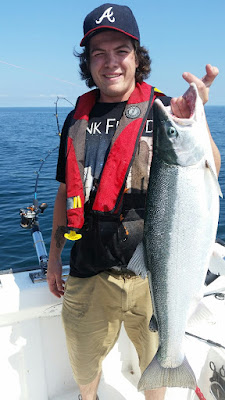
I see red for more Coho action

There is something to be said about those who have refined a fishing technique so well that their reputation is formed by it. I can easily name off fellow fishing friends who fish Lake Ontario and subsequently name their preferred trolling technique. Some (maybe even most) of them wish to keep their learnt experience, crafting their technique, a secret. In a humble way, those who rightfully deserve the reputation as a good ____ fisherman, will usually deny knowing enough about their beloved technique to make it the answer to catching fish every day, throughout the season.

From Misc

In some instances though, it becomes such a refined craft that your confidence in its use becomes the only path to your success. "Live by the sword, die by the sword". If your technique is less effective than another technique, then your catch rates also becomes less. Conversely, when your "tried and true" technique is only passively catching fish on other novice angler’s boats, you likely have a few tricks up your sleeves to elevate your success well above average. Further to that, with your refined skill, your success in fish catching numbers exponential grows over others when the fish are hands down focusing on your one technique over any other, that day. I write this thinking about how cutbait has become one of those refined trolling techniques that more folks have intently focused on and many of them completely rely on its success.

Talking to a fisherman who has the need to hold a fishing rod in hand and cast and manipulate the bait, are usually the first to turn up their nose to trolling. Saying words like “trolling is boring” in a tongue and cheek response. Trolling for salmon can be as regimented as you would like it to be, or as fluid and agile as you are comfortable with. Trolling is one big topic from which countless techniques are spawned.

A very quick list of merely salmon trolling techniques that I lean heavily on would look something like this...

-Shallow water LIVETARGET stickbaits off Planer boards in the late April.
-Spoons on downriggers in early May.
-Deep water Cutbait and MC Rockets in late May and June.
-Stealthy wide spread spoons in shallow in late June and early July.
-8 inch Flasher and ATOMMIK flies in late July.
-BlueZone speedy spoons on cores in early August.
-Pierhead stager cutbait and flies in late August.

Each of the above listed would have "parameters" that have crafted its technique on my boat. The parameters discovered through trial and error become like rules and are programmed in your style of fishing. Provided that you pay attention things like trolling speed, properly matched equipment, when and where to use the technique based on conditions, you can then begin to form your own parameters. Understanding the parameters to your technique adds to your level of comfort and helps you to prepare and be confident before lines go in the water. Some anglers may have their own list; some might say they only do one thing every time they are out. The point is, there are many options, much to learn, much to perfect, much to keep your attention to details and it’s certainly “not boring”.

Seeing Red

For years I have been intrigued by new techniques and eager to learn and add to my own list of "Go To" salmon trolling techniques. A technique often referred to as the coho rig, is not something new, just newer to me. I have been trying it out, here and there, in past years with marginal success and really no set parameters learnt with those, too few, opportunities. This spring it started out the same. I tried it and it caught a few fish, then I put it out on the next trip and it caught a few more. After trip trial number 3, the fish responded once more and it was time to pay attention. For the month of May I truly challenged myself to learn as much about this technique as I could possibly cram in while the fish were responding. In the spring the coho are congregated and within close geographic range of the south shore. Historically coho catch rates drop off once the lake stratifies in horizontal temperature bans. The coho seem to spread out, move East and off shore. In May they are here, close, congregated, hungry and it's about that time. Strike while the metal is hot, Red Hot!

If anyone who salmon fishes Lake Michigan reads this, they will be shaking their head thinking where have you been? It’s true, for us Lake Ontario Salmon fisherman, we have been living under a rock when it comes to targeting spring time coho. I think largely because numbers of coho stocked in Lake Ontario were very low. The only coho stocking on the Ontario side is from the Metro East Anglers Club and not from the government. New York contributes to the lake a few coho, and in the past, stocking was the primary catalyst to coho numbers and catch rates. Now catch rates for spring time coho seems to steadily increase with each passing year. The contribution to the coho numbers and catch rates are not from stocking but from the successful recruitment from natural reproduction.

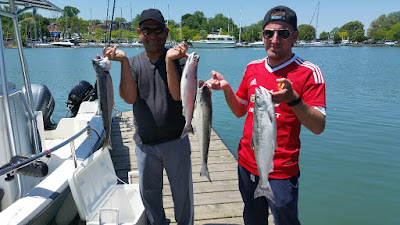
The upswing in Coho numbers still hasn't turned “King” salmon hunters to switch techniques and focus on the smaller cousin of the black gum beasts of Lake Ontario. Even with the continuous ups and downs of catch rates for chinook salmon in the spring, anglers still remain devoted to targeting King salmon and ignore the best tasting red fleshed salmon on Lake Ontario, Coho Salmon.
From Photo_Gallery19

If the attention to fish coho was evident, without a doubt Lake Ontario salmon trollers would steal Lake Michigan anglers coho rig techniques and also start seeing red.

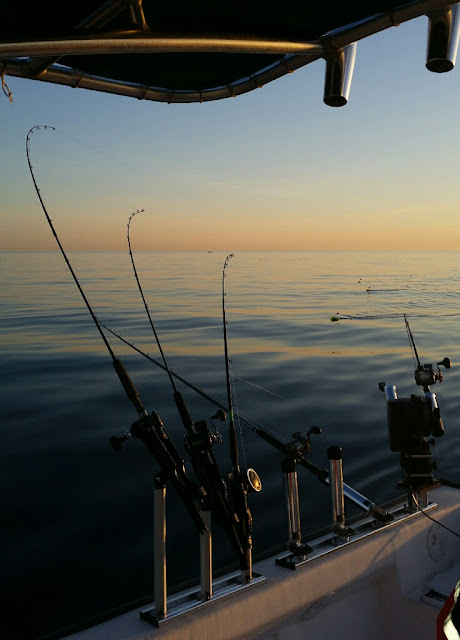
The coho rig consists of a 00 red Dodger and small 1 –to 1 ½ inch tinsel fly. Michigan spring coho fisherman run nothing but coho rigs on all the rods and flush out as many tasty coho from the surface waters of Lake Michigan. Along with the 00 Dodger there is also the mini Red SpinDoctor with the same small flies.

This year I read as much as I can find on how the Michigan anglers run coho rigs and duplicated those techniques even though it is entirely different from the boats trolling around me.
From Photo_Gallery19

A few parameters I have learnt about running in the red...

00 Dodgers require speeds of less than 2.4 mph and I discovered this while running one on a wire diver and watching the cadence of action the rod tip twitches with every sway of the Dodger. Fast shakes of roughly 2 per second would tell you the Dodger is dodging back and forth. If instead the rod tip pulls back and forth slower at 1 per second, then the Dodger is spinning. 2.3 mph will insure a perfect speed before any type of spinning out even on the fast side of a turn. I have slowed the boat down to 1.8 mph and still got bit on 00 Dodgers, but if you are mixing in spoons on the riggers or on leadcores, they are likely not getting many bites at those speeds.

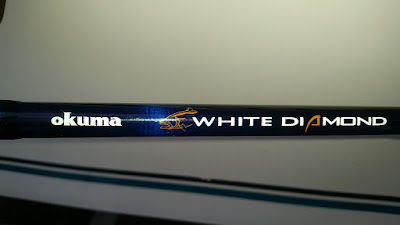
Where the experiment went viral on my boat was using walleye style inline planer board rods with braid line and a 15 ft of 20 lbs Trik Fish fluorocarbon leader. I tested out the new White Diamond OKUMA planer board rod and was thoroughly impressed. An inline planer board needs to run smoothly for Dodgers so not to interrupt the dodging action. My best results were on water that was less wavy and with the White Diamond OKUMA planer board rod with the proper action for inline boards, the boards tracked perfectly without bobbing or jerking. Smooth as silk.
From Misc

Because the coho rigs work when running them shallow beneath the surface (<15 feet down) braid line only requires a small amount of lead to bring the 00 Dodger down below the surface. The Lake Michigan guys use a inline keel weight 5 feet before the dodger. Instead I like to use snap weights and used the 50/50 technique so common for walleye trolling. 50 feet back then the snap weight pinched onto the line and then 50 more feet of line let out and then attach the inline planer board. Adjusting the amount of weight between 1 oz to 2 oz will keep the Dodger in the top 20 feet. My most consistent weight size was 1 ½ oz. and estimate that to pull the Dodger at the 15 foot mark.

The trouble with Dodgers having to run at no faster than 2.4 mph, it means finding baits that also run well at that speed if you are mixing up presentations for other species such as Chinook Salmon and Lake Trout. With great success I found running cutbait on the riggers and deep set wire divers on the rods near the boat in the centre of the spread to target Kings and Lakers with “happy” speeds that the 00 Dodgers worked on the inline planerboards out to the sides of the spread. Now you are fishing for Red, Greys and Black mouths all at the same time.

Those days when you're slower trolling and centre spread with cutbait isn’t getting kings and you require a faster spoon bite, the Dodgers come out and the mini red SpinDoctor and flies go in. 2, 3 or 4 colour leadcores will bring the mini SpinDoctors to the productive under the surface depths. On Friday June 3rd fishing off the Niagara Bar, one rod with 3 colours of leadcore accounted for 7 coho on its own and the total catch with the other 5 rods accounted for only 4 others running spoons. The mini SpinDoctor and flies worked slow at dodger speed, but also fast with spoons running 2.7 mph.

From Misc

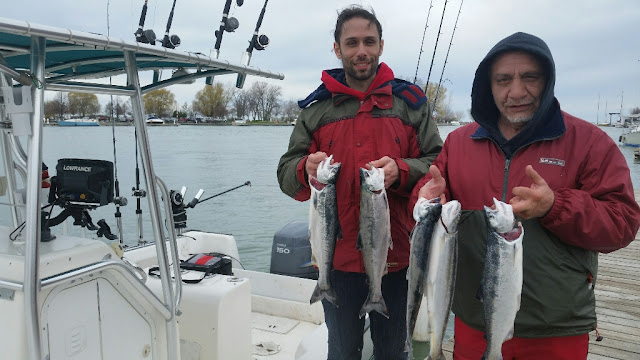
The red 00 Dodger or red mini SpinDoctor are the most important part of the rig, but there are some interesting discoveries when experimenting with the flies as well. The leader length of the fly is absolutely critical. I tried longer (like 20+ inches) and kept trying shorter until I discovered the optimal length is between 12 and 13 inches to the head of the fly.
From Photo_Gallery19

I use my ATOMMIK tournament flies and trim them shorter and slide them on the leader before a bead and the size 2 treble hook. 20 lbs fluorocarbon Trik Fish leader line is all you need and it's plenty strong for those coho in the 4 to 8 lbs class.

To experiment a little and to reduce the fly size a little smaller, I began tying my own "make do" coho flies using the tinsel from Craft Cord. Be sure to look for craft cord without filler yarn mixed into the metallic finish tinsel. Looking around the house for ever dead ball point pen and then pulling them apart and using the ends of the ink tubes that were void of ink. That was the tube to tie the fly and to allow the leader line to be pulled through.

From Misc

Not uncommon to fly tiers, the tube is placed in a vice and then thread is tied on the tube first. To keep the thread in place and not spin around the tube, apply a drop of crazy glue. Then the tinsel from the cut craft cord will be pulled out as single strands to form the fly body with a nice skirt. Simply wrap the thread to tie the tinsel on the tube, add a little crazy glue and finally add some black nail polish on the threads to give it a shine. Trim the tube with side cutters to the head of the fly and run the fluorocarbon leader through the tube and tie it off.

I experimented with a few colours and found great success with Green, black, and blue tinsel as well as adding a little orange marabou to the inside of the fly to add a bright colour to the fly body.

From Misc

The coho rig doesn't just catch coho salmon, we have taken a few rainbows and the odd chinook salmon as well. I am confident now to say if I see the fish feeding on the surface chasing bait and splashing about while we troll past, the coho rig will produce.

From Photo_Gallery19

If you think “Trolling is Boring” then you are not challenging yourself to learn a new technique. If you want to add a new technique to your repertoire, give the Coho rig a try and start seeing Red.

Shane Thombs
www.FINtasticSportfishing.com

Tuesday, May 24, 2016

Is it about the fish held by the fisherman or is it the fisherman holding the fish?

I was off to a slow start the Tuesday back at work after the most amazing weather and good fishing over the May long weekend. At lunch the gorgeous weather persisted and it meant getting up from my desk and going for a walk in the sun. The Durand neighbourhood south of City Hall in downtown Hamilton is full of great historic and some beautiful up scale homes and it makes for a nice stroll. I try to take a different route on each walk to explore and I know this particular route I had passed by before, but never realized this one feature at the corner of Bay Street South and Robinson St.

Decorated along the length of a stop sign pole was flowers and two candles at its base. I almost walked past without slowing my paces, but something intrigued me to look closer.

From Misc

My toes nearly at the base of the two candles on the ground and without my reading glasses on, I focused on the picture of the person from which this memorial display was in remembrance. It was to my surprise a young man holding a Musky. I am not sure why it had a profound effect on me, but I stepped back and knew this was important.

From Misc

The first thought was about how I might have passed by without a change in my stride as I made my trek back to the office, but something stopped me.

Then most important thought was how it wasn't the fish that stopped me to take a look, it was something else. Essentially it was the person first that brought my condolences to pay informal respects, who happened to be a fisherman holding a fish. Discerning what that might mean, it became apparent that after a weekend like we had of incredible fishing, when social media feeds were literally flooding our mobile phones with hundreds of fish pictures that your thumb swipes past quickly in disregard for the moment of which the photo might have been taken. The deeper meaning to the great catch is the experience that the fisherman had just been a part of when the picture was taken.

On Saturday May 21st a friend of mine named Jason Schall from the southern states was up to experience more of what Ontario fishing has to offer. In particular, he desired to fish on Lake Ontario with his goal to catch the final species of salmon to complete the International Game Fish Association (IGFA) prestigious award certificate called the IGFA Salmon Royal Slam. Catching a Chinook salmon would round out his list of salmon species required. At nearly 8 am, a baritone yell of excitement and victory pierced the light wind and turned our attention to our friend Karl’s Lund boat marked OKUMA, trolling past in the opposite direction. No words are required for this picture and what it says about this special moment.

From Misc

The picture of the young man holding the Musky for which the Bay Street and Robinson Street corner memorial was in remembrance of Jordan Jull. He passed away on November 3, 2014 2 days after his 23rd birthday when he lost control of his motorcycle at that intersection. Why did we have to loss another young angler when we already have too few? I don’t know Jordan, but looking at him holding that musky, I feel like I know him because I knew what that moment feels like when you hold that great catch. A “Fish of a Lifetime”

Even with the rat race of our daily lives, as a fisherman I know habits like scrolling past pictures of fish in my feed is another example of missing the true meaning of that great moment in life. It really is, and should be, about the fisherman holding the fish.

Shane Thombs
www.FINtasticSportfishing.com

Saturday, April 30, 2016

Having the patience of a kid for Spring Time Brown Trout fishing, 2016

Everyone who fishes anticipates the coming of spring. This winter was very mild and kept an energy of excitement and anticipation for Spring. Seminars were packed, shows saw increased attendance, and the cash registers were ringing at the tackle retailers during a time of what would be the quiet season.

That enthusiasm was a necessary recharge to the fishing industry after two consecutive years of record cold winters and dismal fishing success throughout the summers of 2014 and 2015 on Lake Ontario. A positive attitude towards the upcoming season continued into the beginning of March with some incredible weather and boat ramps free of ice. For those with aluminium boats that were ready in time, would launch and find Brown Trout snapping up body baits trolled along the shoreline. On March 12th a friend in the salmon fishing fraternity boated the earliest Chinook Salmon I have heard of and it was not a small fish. It was just shy of 20 lbs. Here again the excitement level in the salmon fishing community was given a shot of energy like a race engine with a shot of Nitrous Oxide. Visions of spring time trolling spreads are planted in my mind.

From Photo_Gallery19

Then something happen on the fourth week of March and it shock us back to reality. The winter temperatures arrived, as did the snow falls. But it wasn’t for one week, it lasted for 6 more weeks. Like a kid full of sugar candy, my patience to start the trolling season was wearing thin.

The first half of April saw more snow than we did in November and December and temperatures that resembled what should have been during early March. With the cold weather came North and North East winds. The winds were persistent and constantly coming from that direction, not like it was induced by approaching cold-fronts, but rather like we were stuck in a polar vortex for weeks. (Got to love those new weatherman catch phrases).

By mid-April the coloured water along the shore looked promising for Brown Trout. We worked the shoreline waters of less than 12 FOW and managed the odd Brown Trout pulling stickbaits behind the boards. The best producer by far was the Jointed LIVETARGET smelt in the 115 size in black and silver back 55 feet behind the inline planerboard on 12 lbs test line. In April charter bookings were light and therefore made it possible to get the kids out. Here’s my son Aidan and Mark’s son Jeffery showing the results of a short evening first trip out on the boat for the year. Jeffery holds up the rod with the LIVETARGET that took the fish Aidan is holding.

From Photo_Gallery19

When the weather allowed us to get out fishing I was amazed at the great conditions of coloured water along the shoreline and the satisfactory water temperatures in the shallows. At times, hours of trolling resulted in no bites in what appeared to be the most perfect Brown Trout conditions. In New York they are blessed with incredible Brown Trout fishing and it is my wish that the south shore between Hamilton to Niagara-on-the-Lake would establish a similar fishery. Changes in the methods the MNR stocks Brown Trout would have to change. In the new 2016 stocking plan those changes were issued. Now stocking will take place in greater numbers in less number of locations. Port Dalhousie will see more Brown Trout plantings and that should booed well for the future. I keep thinking we need more though. I’m not an advocate in stocking more to catch more, but Brown Trout are a different type of fish that appears to find Gobies the new food source along the shoreline.

The Ken Fisher Memorial derby held by the Strait Line Anglers Club was the next trip out on the lake and the game plan was to seek a morning king bite in the green water that reached out to 40 FOW. We trolled mostly 27 feet to 32 feet where the colour transition appeared evident. We trolled quicker with spoons and a few stickbaits hoping for a silver fish to add weight to our cooler for weighin. Instead of hitting our first salmon of the year we were taking bites on the spoons we had on the downriggers. We boat the first fish on a spoon stretched back 40 feet behind the ball and down 14 feet. It wasn’t a salmon but a Brown Trout. Then maybe 15 minutes later a silly set up on an inline planerboard was a Super Magnum sized Matrix spoon in blue and silver back 50 feet on mono line with no weight hoping for a bite beneath the surface takes a strike. Dad reels it in and it’s a small Brown Trout that had an unusual appetite. As we net the fish and work to get the hooks out of the fish, Aidan yells Dad, dad that rod. It was the rigger rod set 25 feet down over 30 feet of water and spoon (a bit of a story about this special spoon in a moment).

Aidan tried to pull the rod out of the rigger rod holder, but I had to help. Then it was all him on the rod meanwhile dad and I ready the net untangling the hooks from the previous Brown Trout. Aidan is confident on the rod and works the fish in without instruction, but once I turned my head to what was going on I wondered about the type of fish. It wasn’t behaving like a Salmon and it appeared to be approaching the surface rather than bulldog down like a Lake Trout, none-the-less it wasn’t a light and easy fish like the last two. As it got closer and visible through the pea green water the fish was known to us as a Brown Trout. Not just any Brown trout, but a FAT one that I scooped in the net and high fives to Aidan as we giggled about what he caught it on. We brought it to the scales to weigh in for the St Catharines Game and Fish derby with hopes for it to break the 10 lbs mark. It was shy of that at 9 lbs 4 oz. But later it was told that the Junior division doesn’t have a minimum size. So that put him first on the derby board in the Brown Trout category. No wonder it was so fat, check out one of three gobies found in the fishbox that the fish spit up.

From Photo_Gallery19

That Brown Trout was all Aidan’s and here’s the back story on the spoon. Two years ago on a charter one of my clients was fighting a fish on a Magnum Warrior spoon when the fish charged the boat and the spoon went into the prop. I unravelled the line from around the prop to pull off the spoon that had no more paint on it and it was bent in half at a little more than 90 degrees. About the chuck the spoon away I said to Aidan when I got home, “You want your own spoon to paint it as you wish?”. Of course he said yes, so I bent it back to straight and he picked gold and purple spray bombs from my garage shelf and proceeded to paint one end gold and the other purple. Then I said when it dried, you can add tape to it to finish it. I said you can use transparent tape like this fish scale tape over top of the paint and then add an eye. You can add other tape too, whatever you wish. So he added a glow eye and a glow ladderback. Boom – Aidan’s spoon.

Picture of his spoon.

Each time we go out fishing we have to run his spoon and this day was without exception. That spoon has caught its share of fish. Mostly Rainbows during the summer on leadcore. I asked where you want to run it. He said the downrigger. His call, his spoon, he spotted the rod, he fought the fish and he got it to the net. It was all him and that’s what makes it special.

Like a kid, I had little patience in waiting for the Spring Brown Trout fishing to get underway. Once it did, the kids shared turns on the rods bringing in fish. One of those turns might turn out a Junior division placeholder in the St Catharines Game & Fish Derby.

Shane Thombs
www.fintasticsportfishing.com

Friday, February 5, 2016

Desired Rods and Reels Combinations, fit for the job.

At seminars and follow-up emails, and phone calls I am often asked what rods and reels do I prefer for Walleye and Salmon and Trout trolling. In the interest of answering this question I tried to demonstrate my desired combinations and the application it is used for. What you see in this list is not necessarily rod and reel combos sitting and waiting to be used in the rod rack at home, instead they are a mix and match and then taken apart and put together in another combination to achieve another purpose. Re-purposed. I have developed my own preferences in rod length, rod power, rod action, length of rod butt, line weight, line type and a slew of other attributes. My desired combination of rod and reel will likely be different than yours.

The most notable difference you will likely find with my rod, reel and line selection is my attention to satisfy my charter customers and provide fish fighting enjoyment. These are not combos designed to winch in fish in the hands of a Tournament Angler. On the big lake a derby angler may beef things up for the purpose of boating the biggest fish in the lake, looking for one big bite and not losing it when they hook-up. My approach focuses on more bites and less on focused effort toward the big bite. If I have to sacrifice brute strength in my equipment so I can instead turn more bites, I’ll do it.

From Photo_Gallery9

I grew up in an era that preached scaling down to gain bites when others will not get bit on heavier line and equipment. As a young teen fishing Chinook salmon off the piers, I would cast crankbaits and stickbaits on light line using medium action spinning rods. Our typical lbs test line was 8 lbs test so we can fit enough line on the reel at the smaller diameter to allow those kings to run. We would still get spooled at times, but the light line helped get a few more yards on the reel and let us cast a country mile. But most importantly the light line got us far more bites. I remember my personal best line catch for a salmon was 26 lbs on 4 lbs test and it was the first week of September as those fish were still fresh coming in from the lake full of energy. I was no hero that evening as I landed only 2 and lost 3. But other anglers stop fishing to come over to see what the difference was.

Outfits are personal preference and even more so when your expectations of your catch comes into play. Telling this is no secret, in fact I can’t say the same list will remain this way as I refine techniques, exposure to new products, or that conditions dictate necessary changes. Take it or leave it, you can opt to mimic or dispute my selections, not unlike TV, turn the channel if you don’t like what you’re watching.

A few concepts I wish to clarify first. When talking about rod action I am referring to the amount of bend in the rod when under pressure.

I will use a fraction to demonstrate the portion of the rod that you will see significant bend. ¾ would be a Slower Action bending throughout, ¼ would be a Fast Action rod.

When describing rod speed, it is the speed the rod blank will return back to straight. Faster speed rods will have the tip return to straight (neutral) very quickly – snap back. Slow, Medium and Fast speeds will be used in describing rod speed.

Lastly when we talk about rod power we are talking about the rod’s performance and flex in pulling against a force using the proper line rating. Light, Medium and Heavy power descriptions will be used to describe.

Downrigger Outfits

Flasher/Cutbait Flasher Fly on Downrigger for Salmon

Reel- Coldwater 303 with 40 lbs Test Mono
Rod – Blue Diamond 8ft 6in (BD-C-862MHa) ¼ Action Bend, Medium-Fast Speed, Medium Heavy Power.

Spoons on Downrigger for Salmon and Trout

Reel- Coldwater 303 with 17 lbs Test Mono
Rod – ClassicPro GLT 8ft (CP-DR-802M) 1/2 Action Bend, Medium Speed, Medium Power.

Wormharnesses on Mono on Downrigger for Walleye

Reel – Convector 20 D
Rod – Convector GL 7ft (discontinued but consider Blue Diamond 7ft 6in BD-C-762MLa) 3/4 Action Bend, Medium-Slow Speed, Medium-Light Power

Secret Weapon Rig 3 colour Leadcore on Downrigger for Walleye

Reel- Convector 30D
Rod – Deadeye Leadcore 7ft 6in (DE-LC-762M-T) 1/2 Action Bend, Medium Speed, Medium Power.

Big Boards

Jet divers and small directional divers with 30 lbs Braid used for Walleye and using big boards

Reel – Convector 20 D
Rod – Convector GL 7ft (discontinued but consider Blue Diamond 7ft 6in BD-C-762MLa) 3/4 Action Bend, Medium-Slow Speed, Medium-Light Power

From Misc

2 to 6 colour Leadcore used for both Walleye and Salmon using big boards

Reel - Convector 30 D
Rod – ClassicPro Leadcore 7 ft (discontinued but consider Deadeye Leadcore 7ft 6in DE-LC-762M-T), 2/5 Action Bend, Medium Speed, Medium Power

From Misc

7 to 10 colour Leadcore used for both Walleye and Salmon using big boards

Reel - Convector 45 D
Rod – ClassicPro Leadcore 7 ft (discontinued but consider Deadeye Leadcore 7ft 6in DE-LC-762M-T), 2/5 Action Bend, Medium Speed, Medium Power

Inline Boards

Spring Brown Trout and Fall Walleye on stickbaits and crankbaits on 14 lbs monofilament pulled behind Inline Planer Boards.

Reel – Convector 20 D
Rod – Deadeye 10ft (DE-PB-1002M), 1/3 Action Bend, Medium-Fast Speed, Medium Power

Inline Planer Boards with Leadcore or Copper for Salmon

Reel – Leadcore; Same as above, Copper; Clarion 453 for up to 400 ft
Rod – Classic Pro GTL 8ft 6 in (CP-CL-862M) ¼ Action Bend, Medium-MediumFast Speed, Medium-Medium Heavy Power.

DIVER RODS

Wire Divers for Salmon and Trout and Walleye

Reel- Coldwater 303D with 30 lbs 7 strand wire
Rod – Blue Diamond 10ft with TwillieTip (BD-C-1002MH) 1/2 Action Bend, Medium-Slow Speed, Medium Power.

Braid Divers for Salmon and Trout and Walleye

Reel- Coldwater 303D with 30 lbs braid
Rod – Coldwater 10ft 6in with (CW-C-1062M or MH) 2/5 Action Bend, Medium Speed, Medium Power.

Mono Divers for Stager Salmon

Reel- Coldwater 303D with 40 lbs mono
Rod – ClassicPro DD 10ft 6in (CP-DD-1062M) 1/5 Action Bend, Medium-Fast Speed, Heavy Power.

There are always trials with new techniques and coincidentally efforts are made to matching up with different rods and reel combinations to discover the most desired combinations in refining or craft. Desired combinations can also be named favourite rod and reels for the job, or most trusted, or most preferred. Regardless of what you like to call it, you will develop your own combinations you are most confident in. Your list will take on its own shape, it will morph as conditions change and your trials teach you more of what you like and dislike. Why do we go through this effort to finding the right combination? To build confidence. A confident angler is Kryptonite to fish. The Rod and Reel is the Superman “S” on the crest.

If you like to try out some of these listed examples, by all means. It’s a starting point to a list of desired combinations you will modify as time passes. Keep in tune, be aware and enjoy that time to develop your own confidence in your equipment selection.

Shane Thombs
www.fintasticsportfishing.com

Friday, December 4, 2015

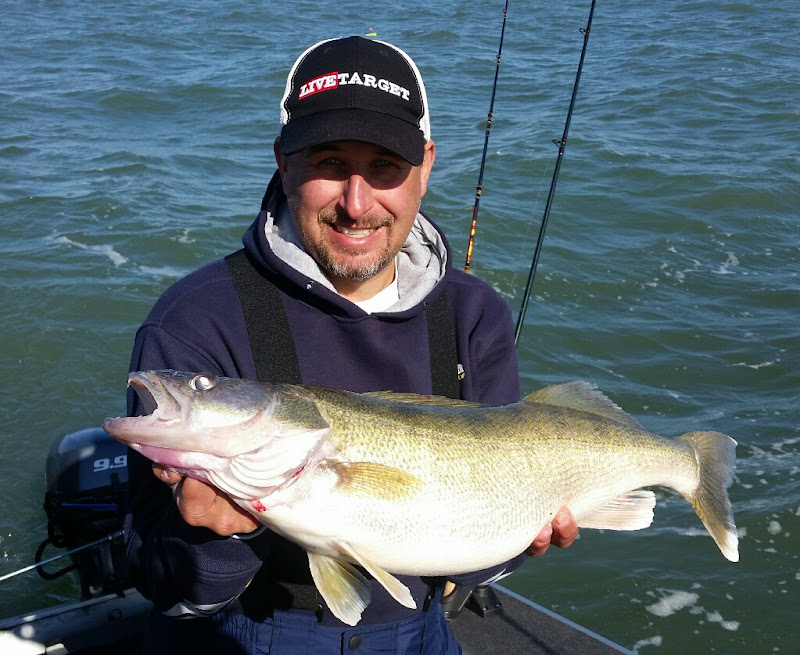
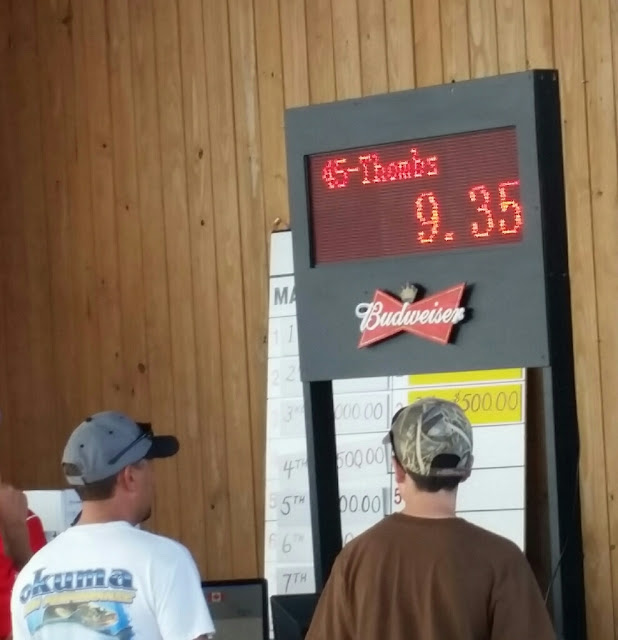
Using a LIVETARGET strategy to prepare for your the next Lake Erie Walleye Tournament

Making the big lake a little smaller, dialing in the numbers and selecting the right bait are what I would suggest, are steps to take, in preparing to compete in your next Lake Erie walleye tournament.

The sheer size of Lake Erie can overwhelm a newcomer to the lake. For a tournament angler the strategy in preparing for the upcoming tournament is in determining where the right tournament fish are located. Unlike bass fishing near structure, nomad walleye are constantly repositioned beneath the Lake Erie swells. Not only will walleye move in any direction a compass can point, but also up and down through the water column.

From Photo_Gallery16

Arriving at the port a few days before the tournament should be with one thing in mind. To find productive water is of upmost importance. To do that properly requires a plan that will help manage your time and space to scope out different sections of the lake. Make the big lake a little smaller by breaking it down into smaller sections. Those sections will be many miles apart so planning your approach to cover as many sections as possible is where your time management skills come into play. Keep to a schedule knowing that catching a boat load of fish isn’t the need; hence your time is less fishing and more exploring. Catch a fish or two and then move. Be sure to add a couple of unconventional areas to the list of sections of the lake to visit. They may not even need to get a line wet to know it’s not going to work out. If you do find that unique spot, that is completely unconventional, it can pay big dividends, it may win you the tournament.

Your judgment of what are the more productive areas will come from what you see on your SONAR, paying close attention to what might be different in your “picture” as you scan and troll one section to the next. Write all these things down or use your cell phone to snap a photo on the SONAR screen along with your position shown on the plotter.

From Photo_Gallery18

On the Ontario side of Lake Erie, you should be aware of the location commercial fisherman are deploying nets. Keep an eye out for the red and black flags that mark the ends of the nets and steer clear. Not only is fishing usually poor in the area for obvious reasons, but the nets pose a risk to navigation and loss of gear if entangled in a net.

From Photo_Gallery19

Big Fish Friday can be your chance to dial in the numbers after determining your top sections of the Lake the days before. You may want to leave your best section of the Lake to tournament day, but you do need some fish to work, so you can refine your presentation. Keep an eye on where you see fish suspended in the water column. Guess the right number of colours on Leadcores and the numbers on line counters to run divers down into that depth zone. Start with some variety in your numbers and get ready to dial in on the right numbers when the fish respond. The first walleye bite is an anomaly, two bites is an indication, and three bites show a pattern. Duplicate the numbers, but always keep a small portion of the spread to test other numbers. Numbers will change over the course of the day. In the clear water of Lake Erie’s Eastern and Central Basins, walleyes will move up and down in the water column based on conditions. “Low light eyes up near the sky, midday eyes down to the bottom they ply”.

From Photo_Gallery16

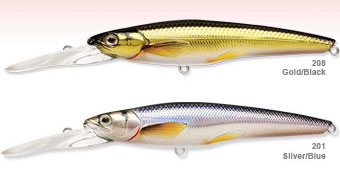
Selecting the right bait is simplified for you when you consider LIVETARGET offers the most adaptable line of Lake Erie walleye trolling baits on the market. If you troll 1.5 mph or all the up to 3.5 mph, LIVETARGET Rainbow Smelt series of baits catch Lake Erie Walleye. The deep diving banana baits are awesome for slow trolling, the deep diving jerkbaits are an excellent mid speed bait in the 2 -3 mph range. The shallow banana baits can run slow but will equally catch Walleye up to 3 mph. If a speedy troll is your game, the shallow Rainbow Smelt Jerkbait will track a straight line.

From Photo_Gallery18

Pull LIVETARGET hardbaits using monofilament line for shallow sets, use snap weights to target depths between 20 and 35 feet, use Leadcore line from anything between 15 to 60 feet down and behind directional divers or downriggers from 20 feet down to as deep as you like. Shallow diving Jerkbaits behind directional divers, shallow and deep divers on monofilament and leadcore, the presentation options are numerous.

True to the LIVETARGET name, the rainbow smelt series of finishes are the most lifelike Lake Erie baitfish looking colours available in a hardbait. In sunny conditions the silver/blue, silver/black or overcast conditions tie on a gold/black or silver/bronze.

From Photo_Gallery17

In this year’s Lake Erie tournament walleye fishing consider eliminating unproductive water by making the big lake a little smaller, dial in the numbers to present your baits in the zone, and simplify the task of selecting the right bait by looking no further than the LIVETARGET Rainbow Smelt series.

Shane Thombs
www.FINtasticSportfishing.com

Friday, November 20, 2015

Splash-Down Browns

Your boat’s first splash-down of the year, always comes with some angst. Turn the key with hopes all will run smoothly, the boat will run like it did last year. You hope for no surprises. It would be considered a good trip if your planned first launch and boat ride runs smoothly and all things work accordingly. Where a good first trip can be considered an all-around success is if you can also add to the trip, your first fish of the Lake Ontario trolling season.

Although tossing in the boat some of your fishing gear, might not be the priority when you launch the boat for the first time in the early spring, after an hour or two of paying close attention to everything mechanical and functional in the boat, your angst settles and your attention turns to fishing. On Lake Ontario in Late March and Early April that attention will be trolling shallow for Brown Trout.

From Photo_Gallery16

Catching Brown Trout on your first early spring outing is not only possible, but likely if you concentrate on finding warm and off-coloured water, and be equipped with lighter gear then you would normally use for salmon. When selecting a boat ramp adjacent to better early spring brown trout water, not just any stretch of Lake Ontario shoreline will do. On Lake Ontario for Ontario anglers, consider two parts of the lake to be your most productive Brown Trout water. The two most productive early season Brown Trout areas on Lake Ontario would include Prince Edward County’s west shoreline, near Wellington, and the extensive shoreline from Hamilton to Niagara-on-the-Lake.

From Photo_Gallery15

Be aware of the conditions along those shorelines to quickly find the better locations to home in on Browns. There is rarely a time where Brown will be scattered and spread out, they are most commonly concentrated on areas that contain warmer water and slightly off coloured water to offer security when shallow. Shallow water means less than 20 feet deep with waters less than 12 feet deep as the highest probability for finding warmer water with a little colour.

From Photo_Gallery13

Warmer water can come from the outflow of rain swelled creeks. The plume of water will often be coloured brown and as it reaches out into the clear cold waters of Lake Ontario, the colour transitions to green. Salmon trollers love the colour change to green, but as a brown trout fisherman you shouldn’t be as concerned with that stretch of water. Browns will seek out the warmest water and that often is found immediately in the off coloured water.

From Photo_Gallery14

Additionally, the Lake Ontario shoreline can also be coloured by an onshore breeze from a day or two before where large sized waves crashed the shoreline. Turbidity will add colour in the water and can draw fish in close to shore, but you will need to find any pockets of warmer water. Waves have a tendency to mix in cold water from the main lake and chill the water that was once a few degrees warmer before the waves kicked up. The perfect scenario is to have coloured shoreline water that meets up with the warmer plume of run-off water by a creek or large over flowing ditch.

From Photo_Gallery15

Browns in March and early April are not necessarily feeding on smelts or alewives; it’s too early for smelt or alewife to come in shore. Shoreline water temperature below 40’F will inhabit Gobies and emerald shiners and they will contribute to the diet of early season Brown Trout. By mid-April with waters warming above 40’F the smelt come in and by late April the alewife are crowded in the shallows. So much so that it’s hard to fish Brown Trout in areas that produced fish only a few weeks before.

From Photo_Gallery15

Leave your heavy salmon gear at home and think about fishing Brown Trout like you would with gear you would use for walleye fishing. 10 lbs test monofilament, consider using inline planer boards and almost entirely your lure choices will consist of stick baits and thin metal and wide body flutter spoons that wobble effectively at slow speeds.

With water temperatures in the 30’s and low 40’f range, your more productive trolling speeds will usually start around 1.6 mph and will rarely exceed 2.1 mph. Not unlike the refined techniques from avid walleye trollers, you will find that presenting baits with consistent speed and less erratic action work for Brown Trout. Inline planer boards jumping over waves will jerk the bait out of the strike zone and look unnatural. Smooth running planer boards and stretchy monofilament line will translate into more brown trout bites. Trolling in the same direction of the wind is often the solution, but also the stretch of monofilament will bring added flex to the line and dampen any sudden jerks and jumps from an inline planer board.

Wide wobbling light flutter spoons like from Williams, Silver Fox or older spoons like Evil Eyes are great when used on a 1 or 2 colour lead core or with a few split shot to add weight to pull the spoon down. Trolling under 2 mph can be difficult for some spoons have enough wobbling action so even a little bend in the thin metal can add action. Bend the line tie end of the spoon up away from the cup of the spoon and bend the hook end of the spoon down to exaggerate the cup of the spoon.

From Photo_Gallery16

Likely the most productive tackle to focus your efforts will be to run shallow diving stickbaits like the LIVETARGET Smelts with my favourite being the LIVETARGET shallow lip Banana Baits. Rainbow smelt or Gold is the two best coloured baits and both smaller and larger sizes have their time and place. Run the smaller sized LIVETARGET shallow stickbaits off the outside (farthest from the boat) inline planer board on a slightly longer lead (depending on how shallow you run the board up closer to shore). Regular sized LIVETARGET Smelts and shallow Banana Baits can run on shorter leads and still manage to dive at depths in excess of 10 feet. Shallow Banana Baits tend to dive deeper than the regular smelt style baits if you are looking to adjust your lead lengths and achieve like depths.

From Photo_Gallery14

So often you hear the line- “I’m only running four rods, why do I need more than two planer boards?” In my opinion, planer boards should be used on the majority of your complement of rods in your spread. If I am limited to run four rods, I prefer all of them to be pulling stickbaits on inline planer boards. Two lines out on each side. Sometimes in clear water and in an effort to keep the boat running over deeper water and allowing the boards to quietly pull baits nearer to shore in shallower water, I will run 3 on the inside (between the boat and the shoreline). The key to running multiple boards off one side of the boat gives you the advantage to judge one well tracking board, against the other, in case the line collects debris or the bait fowls.

If you have the opportunity to run six or more rods then a 2 colour leadcore and flutter spoon off the back of the boat can be deployed, and don’t hesitate to run a downrigger with short lead length behind the downrigger weight using a small bright coloured spoon to pick up a curious brown trout seeking to find what the commotion is all about.

Boat traffic can spoil a good spot. Learn to leave a spot and return hours later. Continuously pay attention to where there may be rafts of diving ducks or terns and gulls feeding vigorously in one area. This often happens mid and late April as many of the migratory fish eating gulls and waterfowl are passing through.

From Photo_Gallery7

Keep those hooks sharp and pay attention to the style of baits that get the most action. Duplicate lead lengths to ensure you are reaching the best depths. Close attention to your surface temperature and look at the water clarity regularly. Use the cavitation plate on your outboard motor as a measure. When you can see the cavitation plate, you have decent colour. Too much turbidity to the water should tell you to use larger sized bright coloured baits with rattles or jointed baits to add sound. Cleaner water can mean the use of smaller more natural looking baits and concentrate on the planer boards to set them away from the boat.

From Photo_Gallery11

When the boat ramp is clear of ice, your boat is ready to splash down for the first time and you want to catch the first fish of the open water season, look to the shallows for Brown Trout. Seek warmer water areas with a little colour and keep your equipment light to catch early season Brown Trout. You can turn your first Lake Ontario trip of the year from just a “good running boat” trip into remarkably successful brown trout fishing trip.

Shane Thombs
www.FINtasticSportfishing.com

Monday, August 31, 2015

Network turns into more Net Work in August

It feels like yesterday when the internet became our biggest tool to expanding our network of anglers. It instantly expanded from those you chat with at your home Marina to those you talk to from Marinas around the lake. We often talk at length about how the ecology of the Great Lakes has changed dramatically and how that has played for or against our success in catching fish. What we tend not to discuss is how as anglers, we have made adjustments in order to continue to catch fish. The evolution of the most successful Great Lakes trollers can be hinged on the Network of anglers they are associated with and build knowledge and experiences with. Technology changed the way we communicate about fishing and the means of using it to stay on top of where the fish are, and how to catch them. We have gone from the 1980s and 90s where dockside conversations and VHF and/or CB radios were all you needed, to internet reports in the 2000’s from around the lake and now it’s all about the Cell phone era of txting and private messaging with a refined group in a circle of friends.
The Network has gone from small and social, to extremely large and unsocial, and then back down to a small and social but from a more refined group of individuals from various locations around the lake in an anglers “Contact List”.

The Dockside Dets

In the 80’s and 90’s the network of anglers in a single marina would be all you need in your network. In the 80’s the fish were plentiful and easily available with a short boat ride from your home port during the majority of the season. If you hadn’t been out in a week or so, a few simple questions around the dock, was enough info to put fish in the boat. Those in the marina worked together to find fish and the VHF radio chatter would help steer you in the right direction or bring others to steer towards you. There were plenty of fish to share and the info was something to share as well. Anyone with “Their ears on” can hear over the radio who is catching them and on what. This network was perfect for the scenario of the day, but something changed. Yes technology advanced but so too did fish location and fish behaviour.

From Photo_Gallery17

Zebra mussels and reduced nutrient loading in the Great Lakes caused Lake Ontario to clear up dramatically in the late 90’s. Where fish were at home in slightly coloured water back in the 80’s were then exposed to the sun, the sounds of passing boats and more aware of the hardware that trollers in the 80’s could “get away with” because back then, the fish would barely see all the gear in the water and if they did, it was interesting to them.

In the late 90’s fish behaviour changed about face. The saying “Here today and gone tomorrow” was a 90’s term between salmon fisherman and if you thought you had those salmon figured out, all too soon you will be challenged once again. Sometimes change was daily, and it was evident that hourly adjustments on technique and location would also be necessary. This era was an adjustment for all anglers to deal with on the lake. The change spurred on “new-age” techniques like Directional divers and Leadcore line then followed by copper line. Boats seemed to expand range and run miles from their home port or for those with trailered boats would consider no Port a home port. This was the “New-Age in Salmon Trolling on Lake Ontario”.

Much of one’s success is about being at the right place at the right time, maybe even lucky. Salmon move dramatically in a short period of time. They will move across the lake, moving with the currents and the waves, following the bait in and out, up and down and then sideways. Fish found in front of your port, may be in front of the next port the next day. Move, Move, Move. Being there at the right time would consider fish in clear water would bite better based on environmental conditions such as during dawn and dusk, choppy or coloured water conditions or move up or down in depth and on structure.

The Internet Knowledge Base

The 2000’s brought on the internet and we developed a Network that was very large expanding to ports around the Lake. The knowledge base grew rapidly as we learnt together in the New-age of Salmon trolling techniques. You contributed your information and knowledge widely. You helped many catch more fish, find more fish and at times discovered you shared a bit too much with too many. That era of anglers developed skills together and we grew appreciation and respect for one-another over the internet. While on the water we used a VHF radio at times and carried a cell phone. We learned towards using the cell phones more and more and soon conversations were cut back from a massive internet audience to a one-to-one conversation. The Internet was a knowledge base but also daily reports helped give the perspective of where fish are being caught. Are they in Toronto, any closer to home caught yesterday, how deep, who was catching them and how deep. This helped as a starting point and after you get off the water you share your experience to the massive network of anglers so they can use your contribution. This was really useful for the weekenders, but a handful of charter and tournament anglers also filled in reports after a successful trip or tournament outcome.

Now-a-days newer trollers come to the internet to help speed up the learning curve on new-age trolling techniques since the knowledge base is easy to query and pull valuable information from. But here comes a divide and the reason why websites like “Spoonpullers” have been regarded by many as an internet chat board that has lost its appeal.

The Cellular Contact List

Experienced anglers already understanding the basics and rarely use the knowledge base of info on a website like Spoonpoullers. It’s a nice to have, but it’s not a necessity or something that will draw you back in on a daily basis to find out the latest and greatest fishing conditions. Experienced Salmon trollers find those types of websites taxing on your time sifting through messages of useless information and small talk. Filtering through so much text from unknown sources leaves much to be desired. Often the new guys to the sport are posting and the experienced guys are not. It’s a double edged sword that has lost its appeal for many.

Most successful anglers in the 2000’s up to today, are mobile, they are agile in use of tactics and location, they are confident in what they have will get bit, but know they are still subject to luck and the need to stumble upon something. Stumbling upon something can be overlooked if you are not paying attention to every detail and successful Great Lakes Trollers, are in my opinion, the most “situation aware” type of fisherman next to fly fisherman. Yes more than the bass guys, there I said it.

From Photo_Gallery18

If you put a situation aware angler in amoungst a refined network of other like-minded “situation aware” anglers then quality information is gathered. No more sifting through superfluous internet chat board messages.

Much of the pioneers that helped develop the internet chat boards are also the founders of the content in the knowledge-base contained in those websites like Spoonpullers. Many of those contributors cut back on communicating on the website chat boards, if they do, it’s more about posting a few pictures and telling funny experiences and not necessarily sharing details and info. If too little info is shared then often a few comments are added on the board to call you out. Give that a time or two and those highly experienced and knowledgeable anglers will instead post on a place like Facebook. Less negative feedback and if there is any, guess what, you are blocked from the Social network of that angler.

Today a cellular list of contacts are a circle of quality anglers that are instead interested in learning just a little bit more with attention to details, and looking for the little thing that counts. This pursuit is not found on the internet chat boards anymore. It is within a refined group of like-minded highly capable, highly respected anglers that are “situation aware”. Details are contained inside the network circle and are not meant to be shared widely. Good information will leak out in time, but let’s hold on to it just a little longer. Keep one step ahead if at all possible. This desire for a good network means you better share useful information as much as you ask for information. Loyalty, comradery, openness, out fishing regularly in similar waters and sharing similar styles of fishing will help find your place in a network. You get out what you put into it. You share more, you get more back. One sided conversations are a full stop to future conversations. Unlike a chat board, where you are called out and look bad if you don’t respond, in an informal Network, you are out, cold turkey. Not a secret society, not a code, just guys willing to share details with one another and manage who is in that circle.

I will admit that this promotes exclusivity, and is not the best environment for newcomers into the sport. I remain adamant that information will be shared on a one to one basis. Call me and I’ll be happy to share what I have experienced. No BS, Ill share details. One caveat though, report back with your results and share what you learnt on the water when you are out. Call on VHF radio, txt, private message or email and the Network grows with another individual.

I blame most fish we catch as a result of what information gathered through communicating. Yes you still have to trick the fish you have under the boat into biting, but it’s true that information sharing is the catalyst to catching more fish.

During the first week of August my family and I were staying at Port Bruce, North Erie Marina. This is a location that I discovered 4 years before through two generations of anglers. Marshman lives in St Thomas and Port Bruce and Port Stanley is his home waters. My other contact was Mike from Catch One Sportfishing a long time friend since back in the late 80’s from Fifty Point Marina. He settled in with a trailer and his 35ft SeaRay at Port Bruce. Information on where walleye were being caught was limited to a few willing to travel further to find fish. Marshman found walleye off Port Stanley near the weather buoy and a few other reports around the dock explained fish coming from 19 miles straight out of Port Bruce.

From Photo_Gallery17

The first half of the week was a constant southwest blow that kept me and my kids from getting out on the lake as well as hosting others to come out with us for a few booked charters. Finally by Tuesday the winds slowed first thing in the morning and my son and I headed in the direction of the Port Stanley weather buoy. As we motored out the wind went from nil to at least 15 km/hr. By the time we stopped 2 miles short of the buoy, the winds were gusting and the white caps were forming already. My 10 year old son Aidan has seen his share of rough water in the past and he was good with it. We fished 4 rods and managed 3 walleyes before calling it quits early in the rough stuff.

From Photo_Gallery17

Wednesday morning the leaves at the top of the trees were still, the kids were yanked out of bed and we set off with my daughter Myra and Aidan with me. We ran out to where we were the day before and the marks on the screen were plentiful. We set lines and got into fish right away, but this time it was sheephead after sheephead. We did pull in a few walleye but knew we needed to move out before the junk fish drive us nuts. So we moved out to 65 FOW and soon we were into a better walleye bite. We stopped at 11 am with 9 in the boat. LiveTarget deep diving smelt was good on 7 colour Leadcore.

From Photo_Gallery17

Thursday morning was going to be a special trip. We were invited by Mike and Lois of Catch One Sportfishing to join them for a fish on their 35 foot SeaRay.

From Photo_Gallery17

Shari and the kids would join me for the first time together in a number of years.

From Photo_Gallery18

We fished the same areas I left the day before and the cooler held 10 walleyes before we headed back in. 8 colour Leadcores with LiveTarget shallow Banana Baits in Green were best by far.

From Photo_Gallery17
Picture of some fish,

Big thanks to Mike and Lois for the hospitality.

From Photo_Gallery18

Mike and Lois are long-time friends and the very first members of my network of salmon fisherpersons. When I cut my teeth in charter fishing in the early 90’s working as a deck hand on Reel Pleasure Charters out of Fifty Point Marina, Mike and Lois had their charter boat 4 slips down from us. In those days there were a dozen other charter boats in Fifty Point and we worked together to find fish. By the mid 90’s Mike and Lois in Catch One Sportfishing and us in Reel Pleasure Charters, were all that were left.

One pivotal moment occurred during the last year of Reel Pleasure Sportfishing that had shaped my take on my own approach to charter fishing from that point on. The last year of Reel Pleasure Charters, Captain Larry O’Conner got a very inviting phone call from a friend and fellow charter captain Yvan of Get-it-Wet Sportfishing. Yvan had heard we were without fish and our success rate was dismal at the time, meanwhile the charter boats out of St Catharines were smashing fish. A dozen coho each trip, kings and lots of Lakers. Larry first came to me and asked if it would be a good idea to move the boat. I said yes, Larry agreed, but since our 30 booked charters were through Stelco, we had to run it by them first. This is where the “buck stops”. This kept Reel Pleasure on the dock in Fifty Point for its last dismal season.

The fishing out of Fifty Point was on a downward tailspin and the results of empty coolers were enough to eradicate the charter industry from Fifty Point. Soon Mike an Lois were left to themselves as the lone charter operator out of the marina and although Reel Pleasure Charters folded, I continued to fish nearly 3 times a week on the Lake mostly out of Fifty Point and continued to communicate with Mike and help out others out of Fifty Point. I was fishing mostly out of the “Grey Ghost” with the late Ken Fisher. We worked with other boats such as “Double Dutch”, “Bears Den”, “Class Act Sportfishing”, and “The Norseman”.

Those days we spent nearly as much time chatting on the dock as we did fishing. The network was truly a social interaction, but you often were unaware of how the fishing was from other ports. That was until the Internet happened.

I developed a website for our fishing club the Strait Line Anglers. We had a messageboard and I would post my results nearly every trip, and soon others added to it as well. One of my posts was about the great comradery between Lake Ontario Trollers. I nicked named them “Spoonpullers”. That was the start of the new Networking website for Lake Ontario and Jason Cuipak picked up the name Spoonpullers and the rest is as you have seen it unfold.

On my return to Lake Ontario the salmon fishing slowed dramatically once more. They were far East and it often meant our attention to fill the boat with Lake Trout. Cowbells and Spin-N-Glows ran on the downriggers bumping along the bottom claimed one Lake trout after another. Every trip we targeted Lakers it was a complete smashing. Anyone who thinks you need to go North to catch lots of Lake Trout- give your head a shake. There were many over 15 lbs. As much as 19 lbs and 4 in the 18 lbs bracket. Most trips were split in half. Try to fish salmon and rainbows for the first half of the trip (if it’s a morning trip) and then Lakers to finish off the trip. The reverse for afternoon trips.

From Photo_Gallery18

Still a few Salmon were making it to the boat and it still remained a cutbait bite whenever the fish were in range. Young Samual caught a nice one weighing in at 20 lbs 4 oz and enough to win the Junior derby division with his fish caught on the last day of the derby.

From Photo_Gallery17

Rainbows were normally an August fish to target, but they still remain at large for the month. At this point it seems we might not have rainbows to target this year.

The odd rainbow that did find our spoons appealing was large bows. Here`s 3 bows that were 11 and 12 lbs.

From Photo_Gallery17

Since the bows were less than dependable, Tom booked his trip that intended to fish for August bows. I let him know it wasn`t happening like he had seen in the past. I asked him if Walleye action on Lake Erie fit the bill. He agreed that catching fish for his buddy Clay would be best and to have some walleye to bring home to eat would be another bonus. So Port Maitland bound we went. Last trip to Port Maitland was the last week of July and there was a fender bender that set us off the dock a little late. Not unlike that time, Tom ran into some frustration driving down to Port Maitland. The highway was a mess with an accident slowing traffic. To make matters worse, Tom was pulled over for speeding and of course that set the start time back 45 minutes.

While we waited for Tom and Clay, as boats arrived after a morning full of walleye fishing, we gathered in some great information. Friend Rob Leblanc came in as well and thrown us a worm harness he had luck with and gave us a waypoint to plug into the GPS and set a starting point.

The Lake was calm and Tom and Clay were ready to see what Lake Erie gold looks like. We pulled walleye from deep water. 80 to 90 feet of water and we were pulling them off the bottom. Downriggers in the mud or 15 feet up off the bottom with a 3 colour Secret Weapon Rig took most of the bites along with Wire and braid 107 sized divers on 3 setting and out 220 to 250 to start the trip. Cores and higher sets on the divers worked in the last hour as the walleye started to rise off the bottom to the 60 foot zone. 8 colour leadcore and 10 colour leadcore managed a few bites. 8 walleye with a number of them coming off would be the final count.

From Photo_Gallery18

August ended on a high note for Lake Ontario. The last weekend of the month the staging mature salmon showed up in front of Port Dalhousie. We unleashed a season`s worth of frustration with full on efforts for making up for lost time.

On Saturday morning I fished the Catch the Fry Salmon Tournament with Ed from Meaford, Ontario and Rob Leblanc that fishes the event with me every year. We fished our skinny water stager program and boated 8 mature salmon for 14 we had on in 37 FOW. Cutbait on 11 inch Hotspot from downriggers and Echip ProTroll and SpinDoctors with A-TOM-MIK trolling flies on the divers and 5 and 7 colour leadcores. We didn`t box the best fish we had on and we landed 5th.

From Photo_Gallery17

The afternoon trip was also very good. We started out in 260 FOW and we had a few shaker salmon and trolled our way into Port Weller. We hooked a big Lake Trout at 19 lbs and then when we approached 40 FOW we hit a 22 lbs king.

Picture .

Then we hooked another moments after netting that one and by the end of that fight we were busy with fish after fish for the next 3 hours. We boated two 24 lbs kings and many in the mid and high teens and low 20`s.

From Photo_Gallery17
From Photo_Gallery18

The next morning Ed joined us for a morning fish. We first worked stager Salmon for 3 hours boating another 6 for 10 hooked. Then we ran out looking for Rainbows and losing 2 nice ones on jumps behind the boat. The Sunday afternoon trip was with Hockey friends Dave and his two boys and his brother Scott and his son Brad. The bite slowed slightly but they still landed 3 salmon out of 5 hook-ups and the biggest was 25 lbs plus. Biggest of the season on the boat.

From Photo_Gallery18

The weekend count was an astonishing 21 for 39. Many lost fish but it was so much fun.

From Photo_Gallery18

Wish we had those salmon sprinkled more throughout the season.

During the month of August the boat moved from Port Bruce, to Foran`s Marina in Grimsby, to Port Maitland to Port Dalhousie all in the same month. Move, Move, Move being flexible, and in the loop of what is happening through a network of great fisherman made the network put the net to work in August.

Shane Thombs
FINtastic Sportfishing